Emergency Roofing After a Tree Falls on Your Palm Beach Gardens Home: Who Should Come First?
When a limb lands on a roof, the first task is not estimating how many tiles broke. It is establishing whether the building, tree, and nearby electrical lines are safe. A heavy branch can remain under tension or transfer weight into framing even when the roof looks relatively intact from the yard.
For homes in tree-lined Jupiter, Biscayne Park, and Coconut Grove, emergency roofing after an impact often involves more than one trade. Utility hazards, tree removal, structural concerns, and weather protection need a coordinated sequence. No one should pull the branch free simply to give the roofer a better view.
Start With People and Power Lines
Keep occupants away from the room beneath the impact and from the exterior fall area. If there is structural movement, an injury, a fire, or another immediate threat, call 911 and follow emergency responders' instructions.
Treat downed or damaged wires as energized. Do not touch the tree, a fence, standing water, or anything else that could be in contact with a line. Keep your distance and contact the utility. Do not assume the area is safe because the house has lost power.
The CDC's guidance for returning to a damaged home emphasizes electrical and building safety before cleanup. A contractor visit does not replace clearance of a utility hazard.
The Usual Coordination Sequence
The order may change with the damage, but the roles should remain clear. When requesting emergency roofing help, report the tree impact and any suspected electrical involvement before arranging access.
| Stage | Main responsibility | Why it comes before the next stage |
|---|---|---|
| Immediate safety | Emergency responders or utility, when needed | People and electrical hazards must be addressed first |
| Load and removal planning | Qualified tree professional, with structural input if needed | A trapped limb can move or expose an opening when lifted |
| Roof and framing assessment | Roofer; engineer or building official when warranted | The visible covering may not show the full damage |
| Temporary weather protection | Roofing contractor when access is safe | Protection must suit the newly exposed conditions |
| Permanent restoration | Appropriate licensed trades | Roofing and structural repairs need defined scopes |
A tree company and roofer should know when the other is expected. If removal will uncover a large opening, discuss how the opening will be protected once work is safe. Do not ask one company to perform another trade's work outside its qualifications.
Why Roof Damage Can Change After Removal
The tree may be covering the breach
A branch can sit across broken decking or hold displaced materials in place. Once lifted, the opening can be larger than it appeared. That is why temporary materials and the next roofing visit should be planned before removal, not afterward.
Framing damage may be concealed
Cracked sheathing, displaced members, or damaged roof-to-wall connections are not reliably evaluated from ground-level photographs. Ask whether further structural review is needed. A roofer may recommend an engineer rather than treating a framing concern as a routine covering repair.
Removal can create additional disturbance
Equipment placement, lifting direction, and access routes all matter. Homeowners should avoid directing the lift themselves. Coordinate property access and keep the work area clear, but leave removal methods to the qualified team.
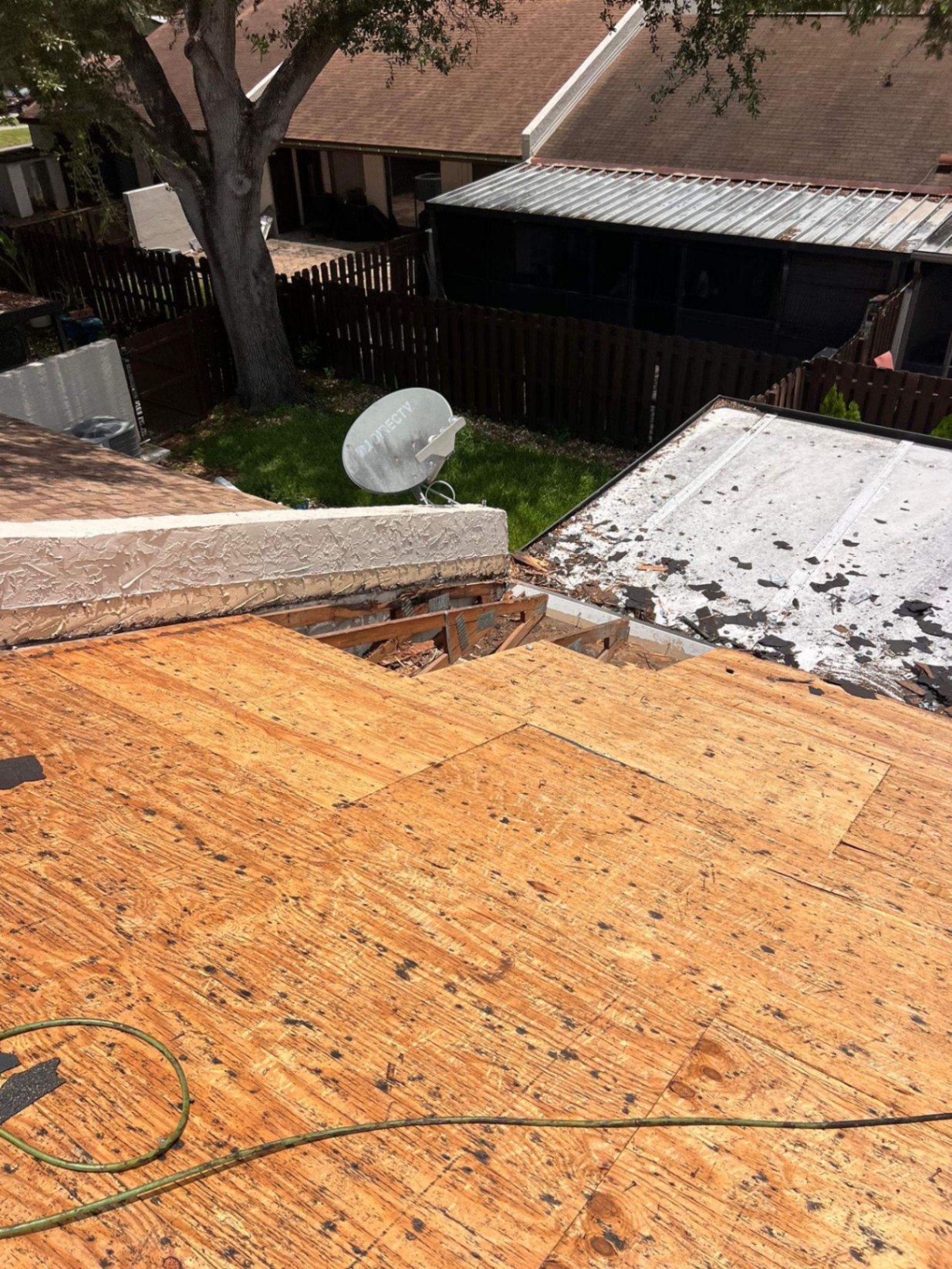
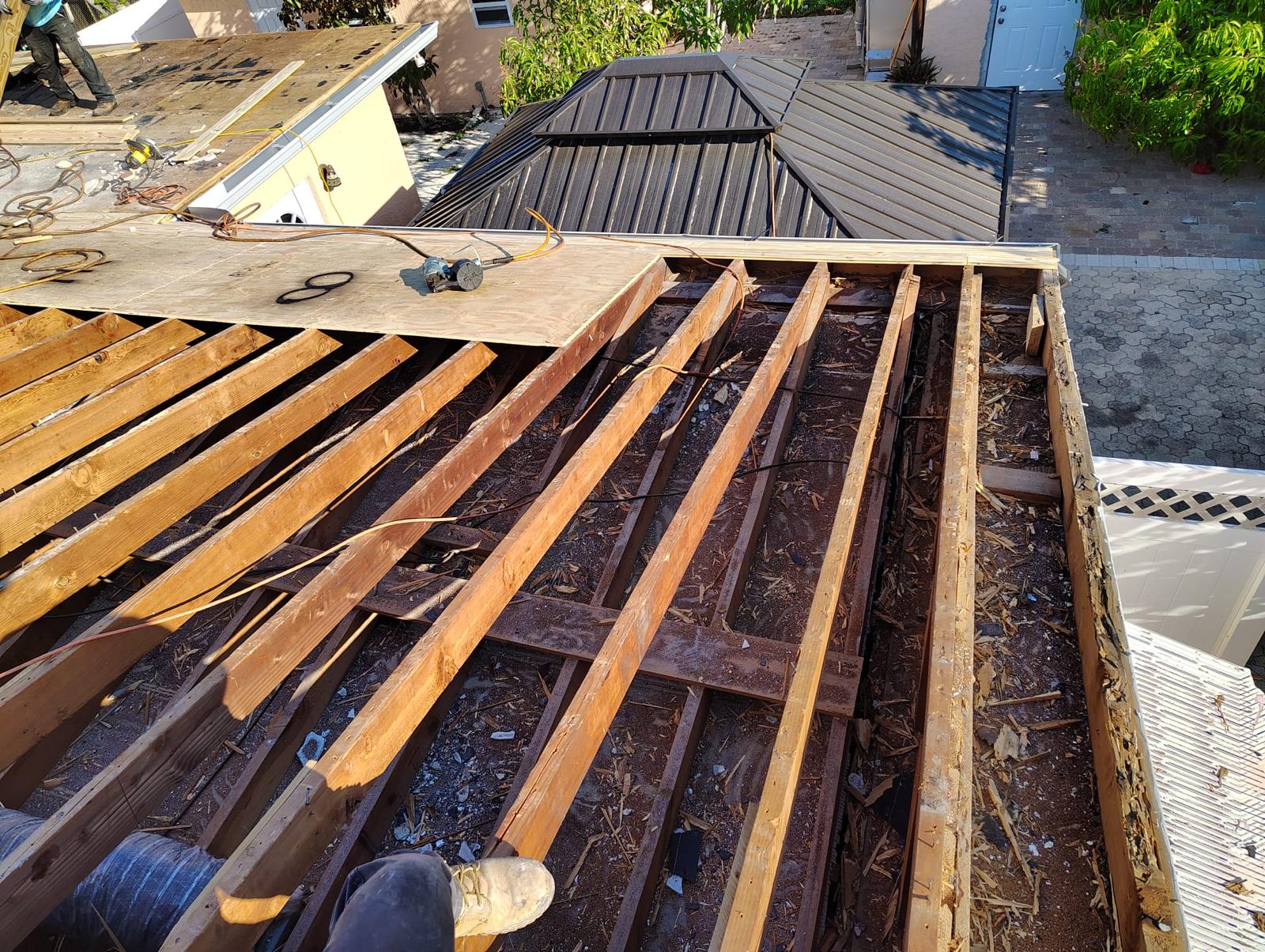
Project photo: exposed roof construction illustrates what a professional assessment may need to examine; it is not a photograph of a tree-impact event.
Prepare the Handoff Without Entering the Hazard Area
Provide the address, gate access arrangements, roof type if known, and a contact authorized to approve work. From a safe location, explain which rooms are below the impact and whether the ceiling has changed.
Ask each company to clarify its scope: tree removal, debris handling, temporary roofing protection, structural review, or permanent repairs. A vague promise to “handle everything” is less useful than knowing exactly who is responsible for each step.
A temporary emergency roofing scope should be distinct from the permanent roof repair proposal. If structural damage affects the roofing plan, resolve that question before rebuilding the outer covering.
Frequently Asked Questions
Should I cut small branches off myself?
Not when they are part of a loaded, suspended, or electrically involved tree. Even a smaller branch can be under tension. Keep clear and let the appropriate professional assess it.
Can a tarp be installed before the tree is removed?
Sometimes the geometry and conditions permit partial protection, but nobody should work beneath an unstable load or near an unresolved electrical hazard. The professionals on site must determine safe access.
Does a tree impact always require replacement?
No. The extent of covering, decking, and framing damage determines the restoration scope. A localized impact is not by itself evidence that the entire roof must be replaced.
Continue the Emergency Roofing Series
Previous: Emergency Roofing for Palm Beach Gardens Flat Roofs: When Drains Back Up and Water Overflows. Next: Emergency Roofing When You Are Away From Your Palm Beach Gardens Home: A Remote Response Checklist.
Arrange the Roofing Part of the Response
PSR Roofing Company Of Palm Beach Gardens can discuss emergency roofing after a tree or limb impact in Palm Beach County. Call (728) 221-5642 and state whether emergency responders, the utility, or a tree company are already involved. Our 24/7 line does not replace 911 or utility hazard reporting.
Palm Beach Gardens, FL, find us on Google Maps.
Need help with Emergency Roofing?
PSR Roofing is Palm Beach Gardens's licensed & insured expert for emergency roofing. Free estimates, honest pricing, and 24/7 emergency response.