Emergency Roofing in Palm Beach Gardens: What Happens to a Wet Attic After the Roof Is Covered?
The tarp is up and the dripping has slowed, so it is tempting to consider the emergency finished. But a roof cover addresses exterior exposure. It does not remove water already absorbed by insulation, sheathing, framing, or ceiling materials.
For a home in Jupiter, Palm Beach Gardens, or Biscayne Park, the next emergency roofing conversation should separate two issues: keeping additional rain out and dealing with moisture that is already inside. Neither should be assumed complete because the stain looks smaller.
A Weather Cover Is Not a Drying Certificate
A roofer may be able to assess the visible covering and accessible decking, while a water-restoration professional evaluates wet interior materials. Concealed spaces may need additional examination. Different materials dry differently, and a dry-feeling surface can hide moisture deeper in an assembly.
The EPA's guide to mold and moisture recommends drying wet materials within 24–48 hours where possible to help prevent mold growth. That is a prompt-action guideline, not a promise that every material can be saved or that mold always appears at a particular hour.
If your home has been wet for longer, seek assessment rather than assuming it is too late to act. Fixing the moisture source remains essential.
Keep Attic Access Safe
Do not enter an attic with wet wiring, unstable ceilings, damaged framing, or uncertain footing. Ceiling drywall is not a walking surface, and hidden damage can make ordinary access unsafe. Report those concerns when calling for emergency roofing help.
Never use an attic as a staging area for buckets if access is hazardous. Do not poke a bulging ceiling or remove saturated materials yourself to “speed up drying.” Keep the area below suspect material clear and get qualified advice.
A musty smell is a reason to investigate, not a way to determine the amount or type of mold. People with health concerns should ask their healthcare provider about exposure precautions rather than rely on a roofing article for medical advice.
Divide the Follow-Up Into Three Workstreams
| Workstream | Main question | Typical professional involvement |
|---|---|---|
| Exterior protection | Is new rain still entering? | Roofing contractor |
| Moisture and interior recovery | What is wet, and how should it be dried or removed? | Qualified water-restoration or remediation professional |
| Permanent reconstruction | What roof and ceiling repairs are needed after assessment? | Appropriate licensed trades |
The exact team depends on the condition. A small localized leak and a heavily saturated ceiling do not need the same recovery plan. Ask which parts of the building were actually assessed and which remain concealed.
Why More Ventilation Is Not Always the Answer
Do not cut openings through temporary protection
Changing a cover can let more rain in or create unsafe wind exposure. If vents are covered or air movement has changed, discuss it with the roofer. Do not loosen the cover or create an improvised vent.
Fans do not remove damaged material
A fan may move air without resolving wet insulation, concealed moisture, or contamination. The EPA cautions against running an HVAC system if you know or suspect it is contaminated with mold. Drying equipment and containment need to suit the actual conditions.
A closed attic may have a different design
Not every attic is intended to ventilate the same way. Some homes have conditioned or unvented assemblies. Adding a vent without understanding the roof system can create new moisture problems. The recovery plan should respect the existing assembly and identify defects separately.
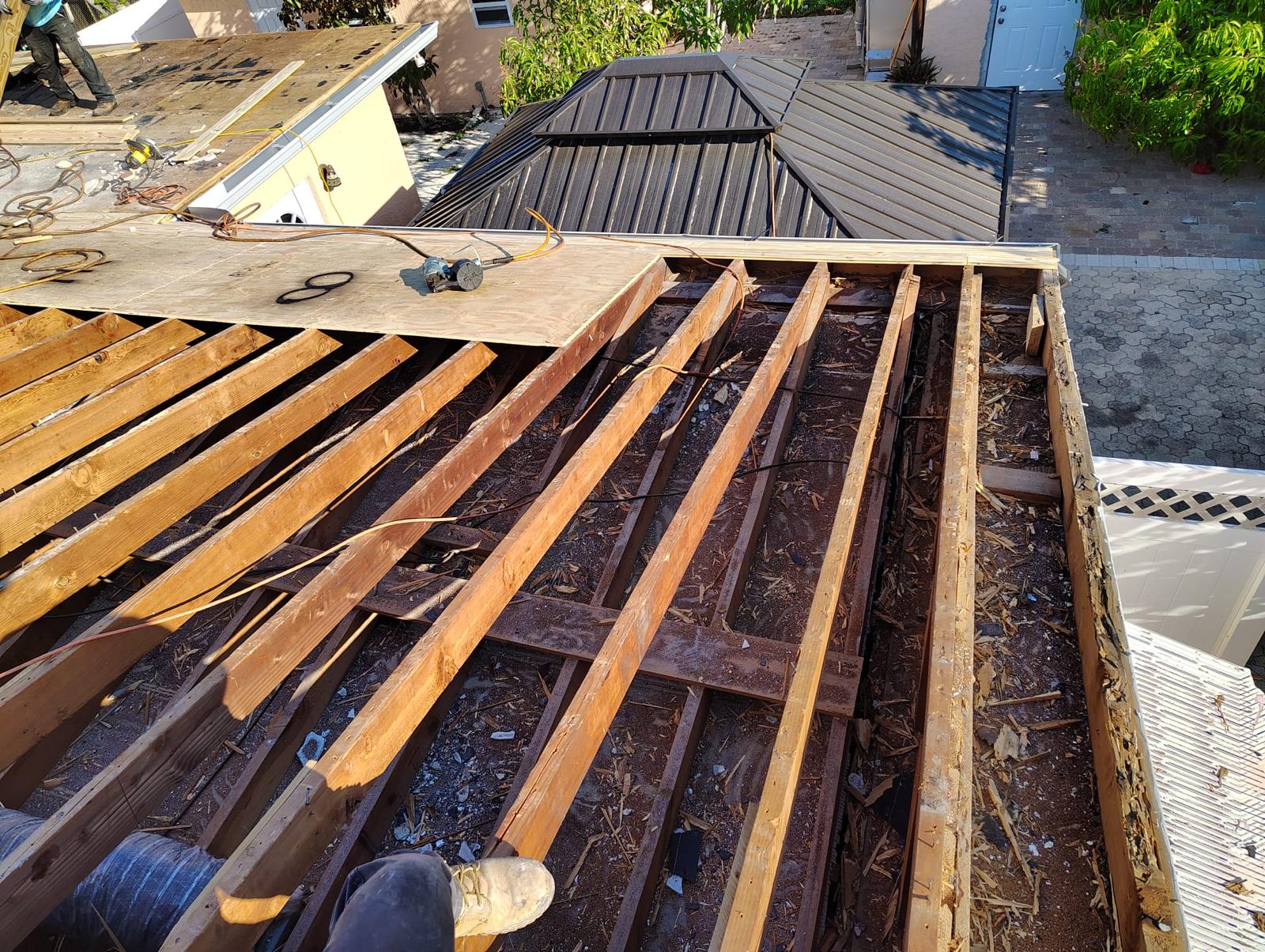
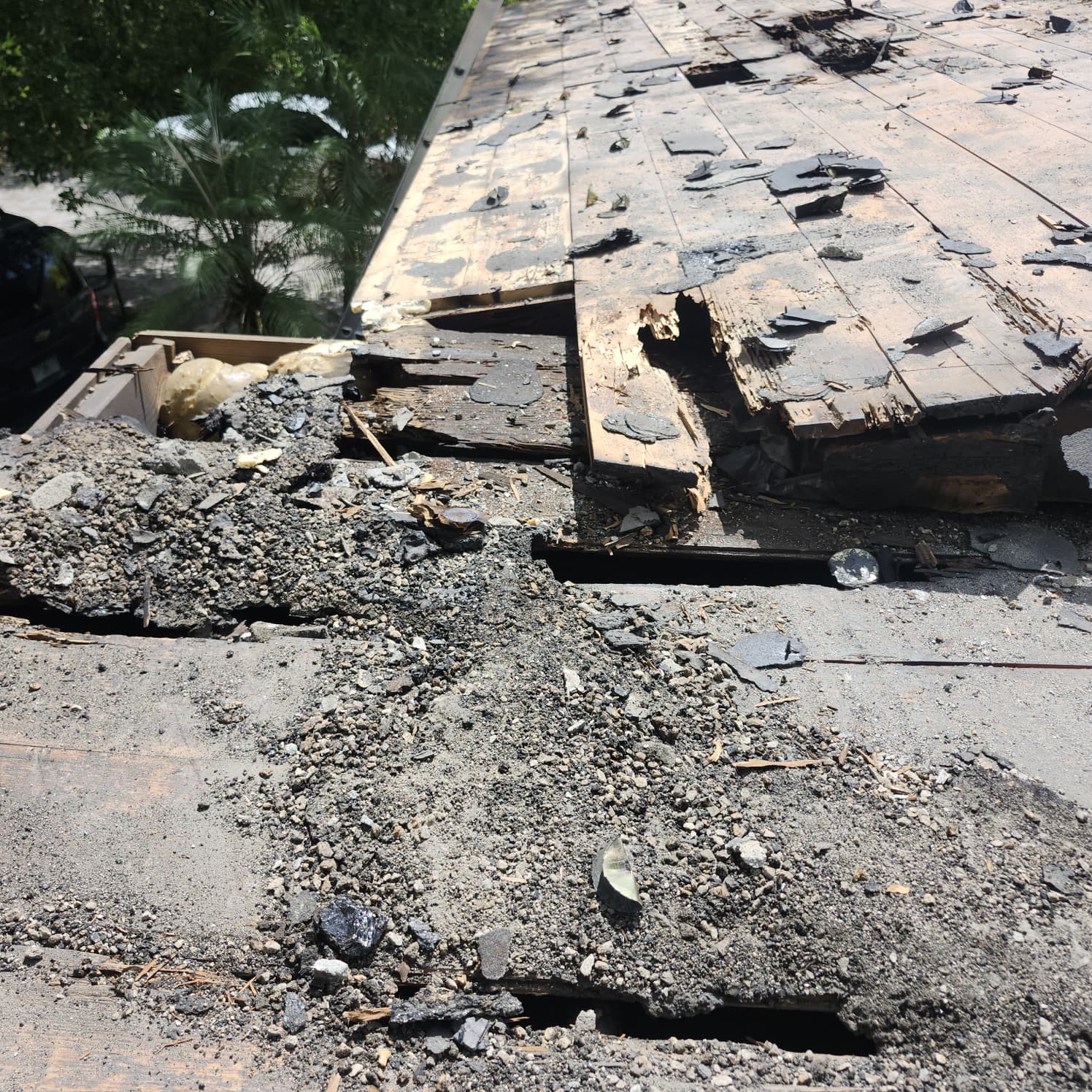
Project photo: opened roof construction illustrates the materials that can require assessment after water entry.
Before Closing the Roof or Repainting the Ceiling
Ask for the condition of affected materials to be evaluated before they are concealed again. Where measurements are used, ask what was checked and how the professional decided the material was ready for the next stage. One measurement at one spot does not establish the condition of the entire roof or attic.
During emergency roofing follow-up, clarify whether the cover remains in place until permanent work begins, who monitors it, and what to do if leaking returns. A roof inspection can help define exterior repairs, while interior recovery needs its own scope.
A permanent roof repair should address the water-entry detail, not just conceal an opening. Separately confirm that ceiling restoration is not moving ahead before moisture-related issues are resolved.
A Practical Homeowner Checklist
- Report the original leak and any continuing dripping.
- Keep unsafe attic and ceiling areas off-limits.
- Ask what materials are known to be wet and what has not been checked.
- Arrange appropriate interior drying or remediation assessment promptly.
- Confirm who is responsible for exterior protection between visits.
- Keep roofing, interior recovery, and reconstruction scopes clear.
- Do not treat a fresh coat of paint as evidence that the problem is solved.
Frequently Asked Questions
Does every wet attic have mold?
No. Moisture duration, material condition, and other factors matter. A professional assessment is more reliable than guessing from a stain or odor.
Can wet insulation stay in place?
That depends on the material, saturation, contamination, and assembly. Ask the qualified professional evaluating the interior; there is no universal keep-or-remove rule for every insulation product.
Can roofing work continue before the interior is restored?
The sequence depends on safety, access, and the repair plan. Exterior and interior teams should coordinate rather than assume one must always finish before the other starts.
Continue the Emergency Roofing Series
Previous: Emergency Roofing When You Are Away From Your Palm Beach Gardens Home: A Remote Response Checklist. Next: Emergency Roofing in Palm Beach Gardens: Why Is Your Roof Leaking Again After Tarping?.
Plan the Next Step After Temporary Protection
PSR Roofing Company Of Palm Beach Gardens can help clarify the roofing scope after a leak. For emergency roofing, call (728) 221-5642 and mention any wet attic, ceiling movement, or electrical concern. Our emergency line is available 24/7; interior drying and remediation may need separate specialists.
Palm Beach Gardens, FL, find our office on Google Maps.
Need help with Emergency Roofing?
PSR Roofing is Palm Beach Gardens's licensed & insured expert for emergency roofing. Free estimates, honest pricing, and 24/7 emergency response.