Emergency Roofing in Palm Beach Gardens: Why Is Your Roof Leaking Again After Tarping?
A drip returning after an emergency visit does not automatically mean the entire temporary cover has failed. Water can enter beyond the covered area, follow framing from a different opening, or drain from materials that were already wet. What matters is getting the changing condition reassessed, not guessing from the spot on the ceiling.
For homeowners in Palm Beach Gardens, Biscayne Park, and Jupiter, emergency roofing after a returning leak should focus on one question: is new rain getting into the building, or is existing moisture still working its way out? A contractor may need both an exterior review and information from inside to answer it.
First, Keep the Affected Area Safe
If water reaches a light fixture, outlet, or electrical equipment, stay out of the affected area. Do not touch the fixture or step into water to reach a switch. A sagging ceiling, cracking sounds, or falling material also means the room should be kept clear. Call 911 for immediate danger; electrical concerns require qualified help.
If the space is safe, move belongings away from the drip without standing beneath damaged material. Do not climb up to tighten a tarp, add weights, or inspect its edges. A wet roof and a temporary cover can both conceal unstable footing.
Call the company that installed the cover, explain that leaking has resumed, and ask for reassessment. If that company is unavailable, describe the existing temporary work when requesting emergency roofing assistance.
Four Reasons Water Can Return
1. The opening extends beyond the covered area
Wind damage does not always stop at the most visible missing tile or torn section. A separate penetration or roof-to-wall connection may be admitting water outside the original protection. During a reassessment, ask whether the covered area includes the suspected entry point and the water path above it.
2. The temporary cover has shifted or deteriorated
Loose edges, torn material, displaced attachments, or movement during another weather event can compromise temporary protection. The solution depends on roof type and safe attachment locations. Adding household adhesive or random fasteners may create more holes without stopping the leak.
3. Water is being redirected into another detail
A cover can change how rain flows near a valley, parapet, drain, or adjoining wall. The roofer should consider drainage as well as coverage. A larger tarp is not necessarily a better answer if it traps water or interferes with an outlet.
4. Previously soaked materials are releasing water
Insulation, sheathing, and ceiling materials can remain wet after exterior entry is reduced. A stain alone cannot establish whether rain is still entering. Moisture assessment and drying may be needed alongside roofing work.
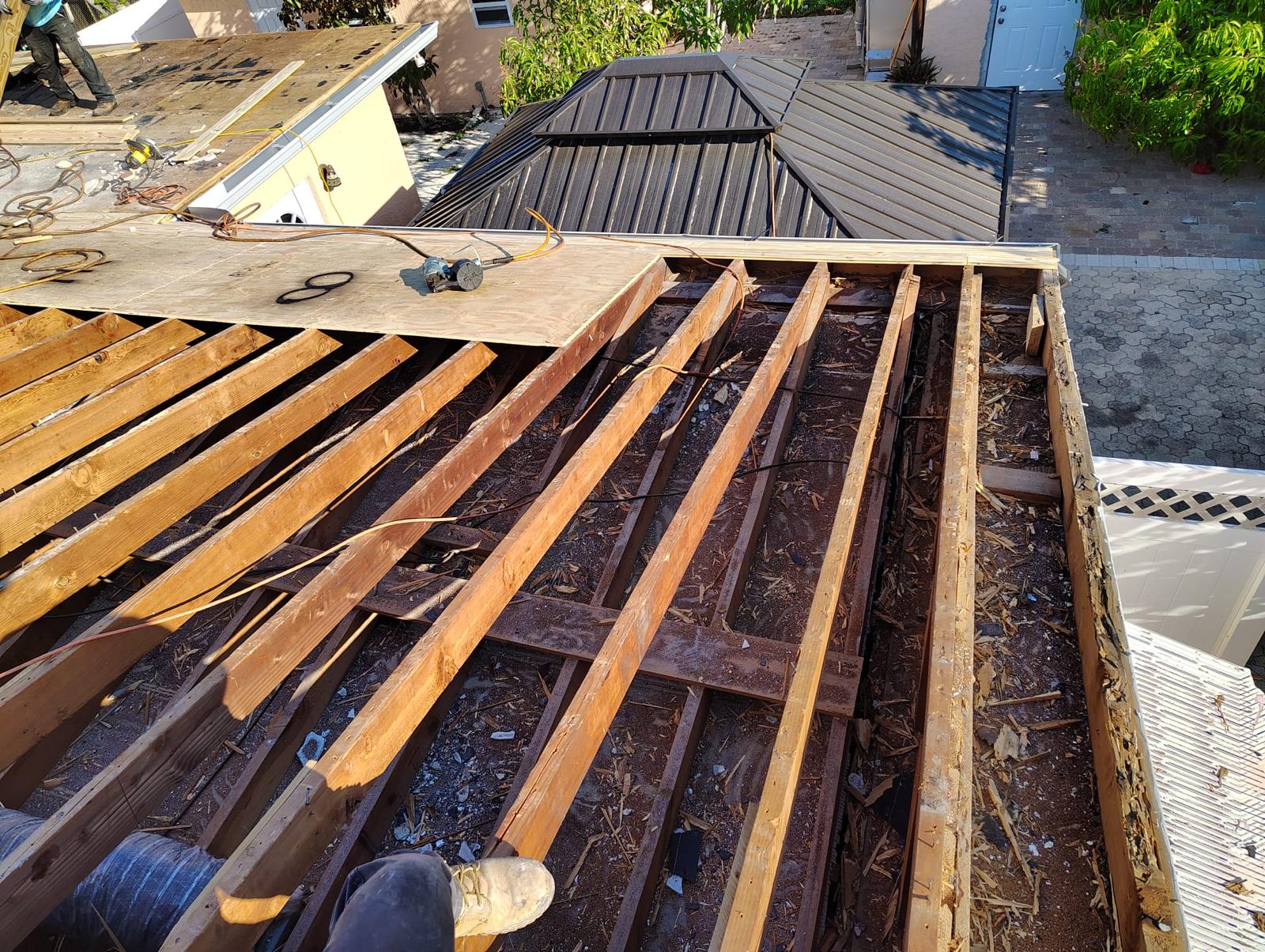
Project photo: opened roof construction illustrates why water can travel through more than the outer covering.
What to Tell the Roofer When You Call Back
Keep the update short and specific. A useful description is: “The cover went on Monday. The kitchen stayed dry overnight. After Tuesday's rain, the same corner began dripping again.” This helps the team compare conditions rather than treating every stain as a new failure.
| Detail to report | Why it helps |
|---|---|
| Time the drip restarted | Connects symptoms to the latest rain or to ongoing drainage |
| Same room or a different room | Helps identify another entry point or water path |
| Visible changes from the ground | Flags shifted material without requiring roof access |
| Electrical or ceiling concerns | Changes the safety response |
| Date and company responsible for the cover | Gives the next roofer context about temporary work |
Take photographs from safe indoor or ground-level positions. Do not disturb the cover before someone evaluates it. Describe what you observed rather than assigning blame or asserting that a roof section is dry.
Ask for a Defined Next Step
A productive emergency roofing reassessment should establish what can safely be checked, whether the protection needs adjustment, and what remains uncertain. Ask for the next review date or the conditions that should trigger another call, especially if more rain is forecast.
Once the immediate entry is controlled, request a separate scope for permanent roof repair. Temporary protection and permanent repair serve different purposes. The return of a drip is a reason to investigate, not proof that full replacement is necessary.
Frequently Asked Questions
Should I remove the tarp to let the roof dry?
No. Removing protection may expose the building to new rain. Drying plans and exterior protection need to be coordinated by the appropriate professionals.
Does a bigger stain mean the tarp is leaking?
Not necessarily. Moisture can spread through materials already wet. A changing stain still deserves prompt attention, particularly when accompanied by fresh dripping or ceiling movement.
Can I wait until the permanent repair appointment?
Do not assume an active leak is safe to leave. Report it now and describe any safety concerns. Weather, interior conditions, and access determine what can happen next.
Continue the Emergency Roofing Series
Previous: Emergency Roofing in Palm Beach Gardens: What Happens to a Wet Attic After the Roof Is Covered?. Next: Emergency Roofing for Palm Beach Gardens Flat Roofs: When Drains Back Up and Water Overflows.
Get a Returning Leak Reassessed
PSR Roofing Company Of Palm Beach Gardens offers emergency roofing for Palm Beach County properties. Call (728) 221-5642 and explain when temporary protection was installed, where water has returned, and whether anyone is at risk. Our emergency line is available 24/7; roof access and work depend on safe conditions.
Palm Beach Gardens, FL, find PSR Roofing on Google Maps.
Need help with Emergency Roofing?
PSR Roofing is Palm Beach Gardens's licensed & insured expert for emergency roofing. Free estimates, honest pricing, and 24/7 emergency response.