Roof Flashing Repair in Palm Beach Gardens: Why Caulk Cannot Fix Chimneys, Walls, and Valleys
Most roof surfaces are uncomplicated: water lands and runs downhill. Leaks concentrate where that simple path changes, at a chimney, stucco wall, valley, parapet, plumbing vent, or roof edge. Flashing is the shaped metal and layered membrane that keeps those transitions watertight. When it fails, sealant placed on top may slow a drip, but it rarely restores the drainage path underneath.
That distinction is important in Palm Beach Gardens, where intense UV hardens sealants and wind pushes rain sideways. A lasting roof repair must identify which flashing layer failed, open enough of the surrounding roof to reach it, and rebuild the detail in the direction water naturally flows.
Flashing Is a System, Not a Strip of Metal
Proper flashing uses overlap and gravity as its primary defenses. Sealant is a secondary safeguard. Different transitions require different details:
| Location | Primary flashing detail | Common failure sign |
|---|---|---|
| Chimney or masonry wall | Step flashing plus counterflashing | Stain near the wall after wind-driven rain |
| Stucco sidewall | Step or continuous flashing integrated behind the wall finish | Cracks or sealant lines where stucco meets roofing |
| Headwall | Apron flashing extending over the downslope covering | Water marks along the full wall line |
| Valley | Metal liner or approved membrane under woven/cut covering | Debris, corrosion, or leaks near the valley base |
| Parapet | Base flashing and counterflashing beneath coping | Interior moisture near the top of an exterior wall |
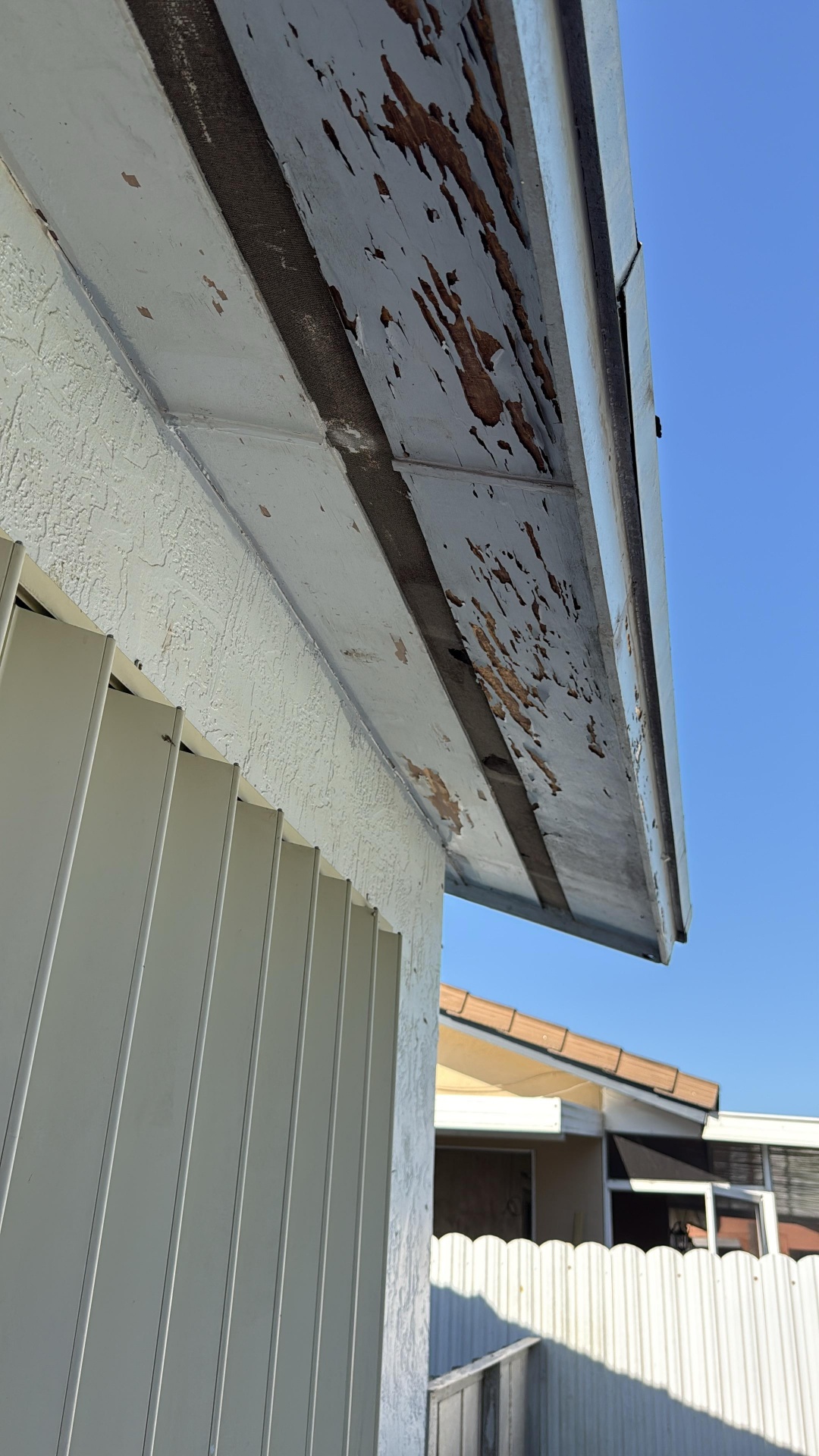
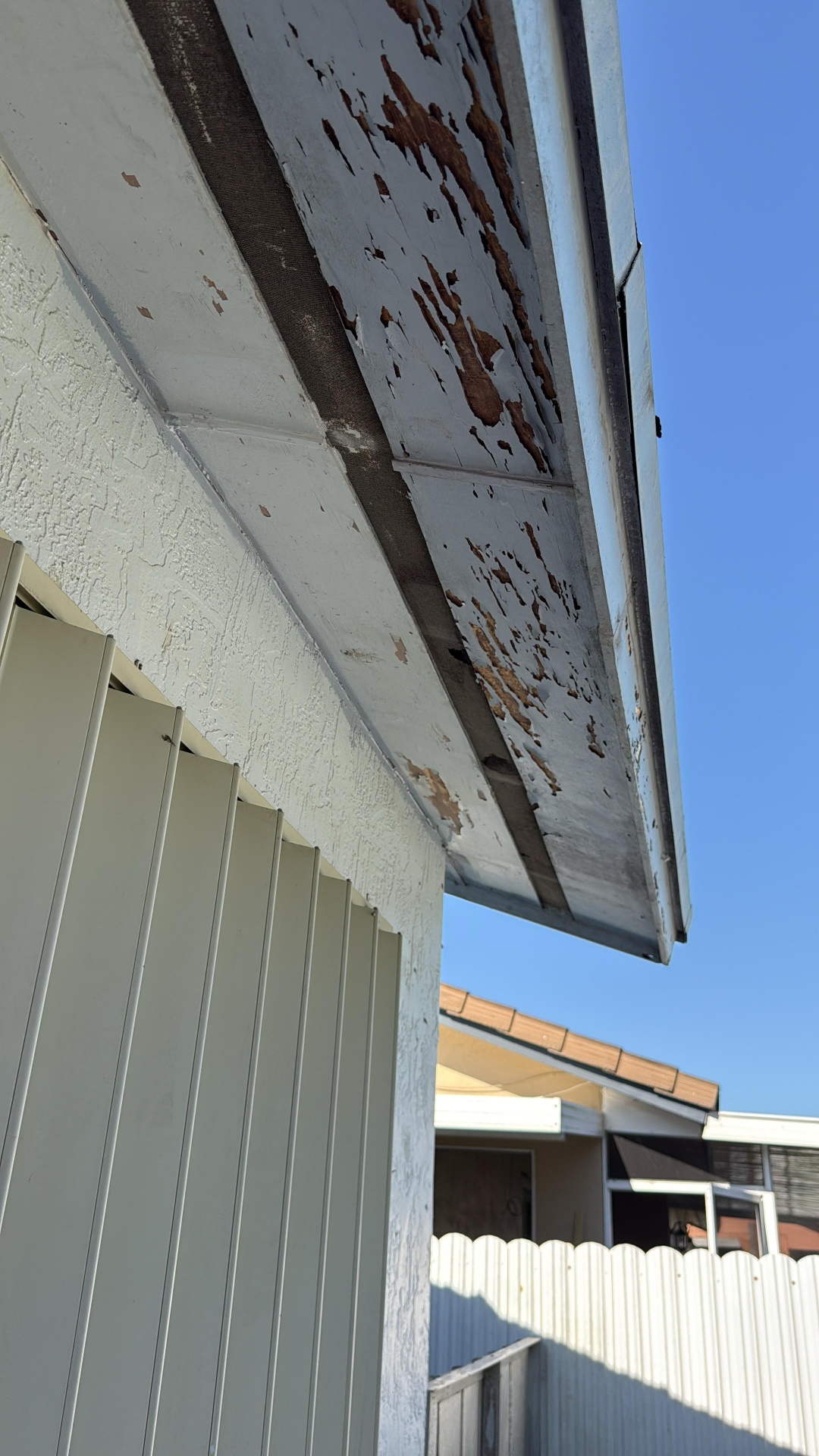
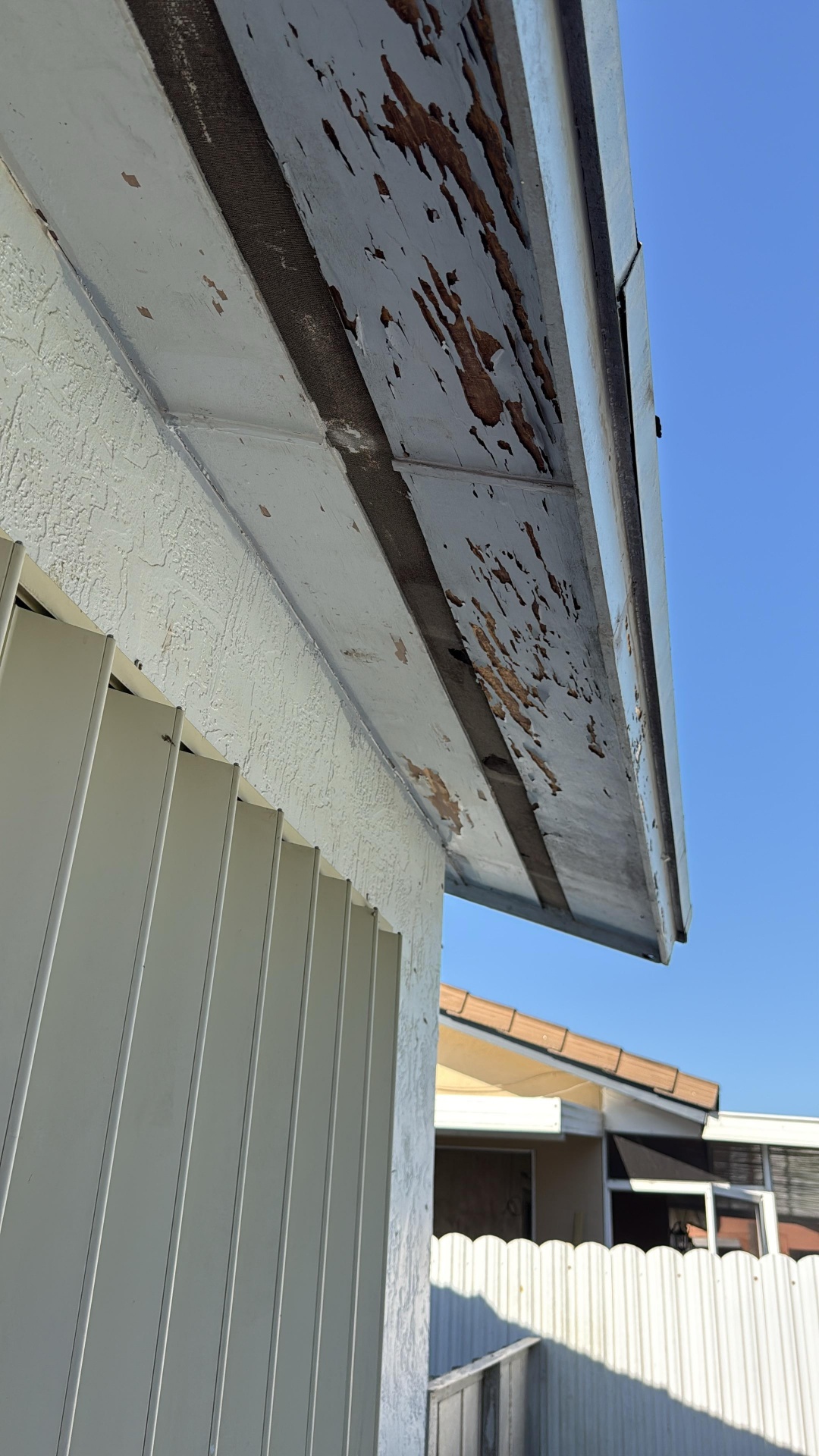
| Eave | Drip edge integrated with underlayment | Fascia staining, peeling paint, or gutter-line rot |
If a proposal says only “seal flashing,” ask which component will be removed and replaced. Without that answer, it is impossible to know whether the work addresses the water path or only the visible joint.
Why Surface Caulk Fails So Quickly in South Florida
Palm Beach Gardens roofs expand in daytime heat and contract after heavy rain. Metal, masonry, tile, and asphalt move at different rates. A thick bead bridging those materials is stretched and compressed every day. UV exposure then makes it brittle, and ponded water or wind pressure finds the first separated edge.
Surface sealant also creates a diagnostic problem. Water can enter higher on a wall, travel behind the flashing, and emerge at the caulked joint. Adding more material at the exit point traps moisture without closing the entry. That is why old repairs often show several generations of sealant but continue to stain the same ceiling.
Chimney and Wall Flashing Repair
A masonry chimney typically needs individual step-flashing pieces woven into each shingle course or integrated with the tile underlayment. Counterflashing is then cut or secured into the masonry above, covering the step flashing while allowing independent movement.
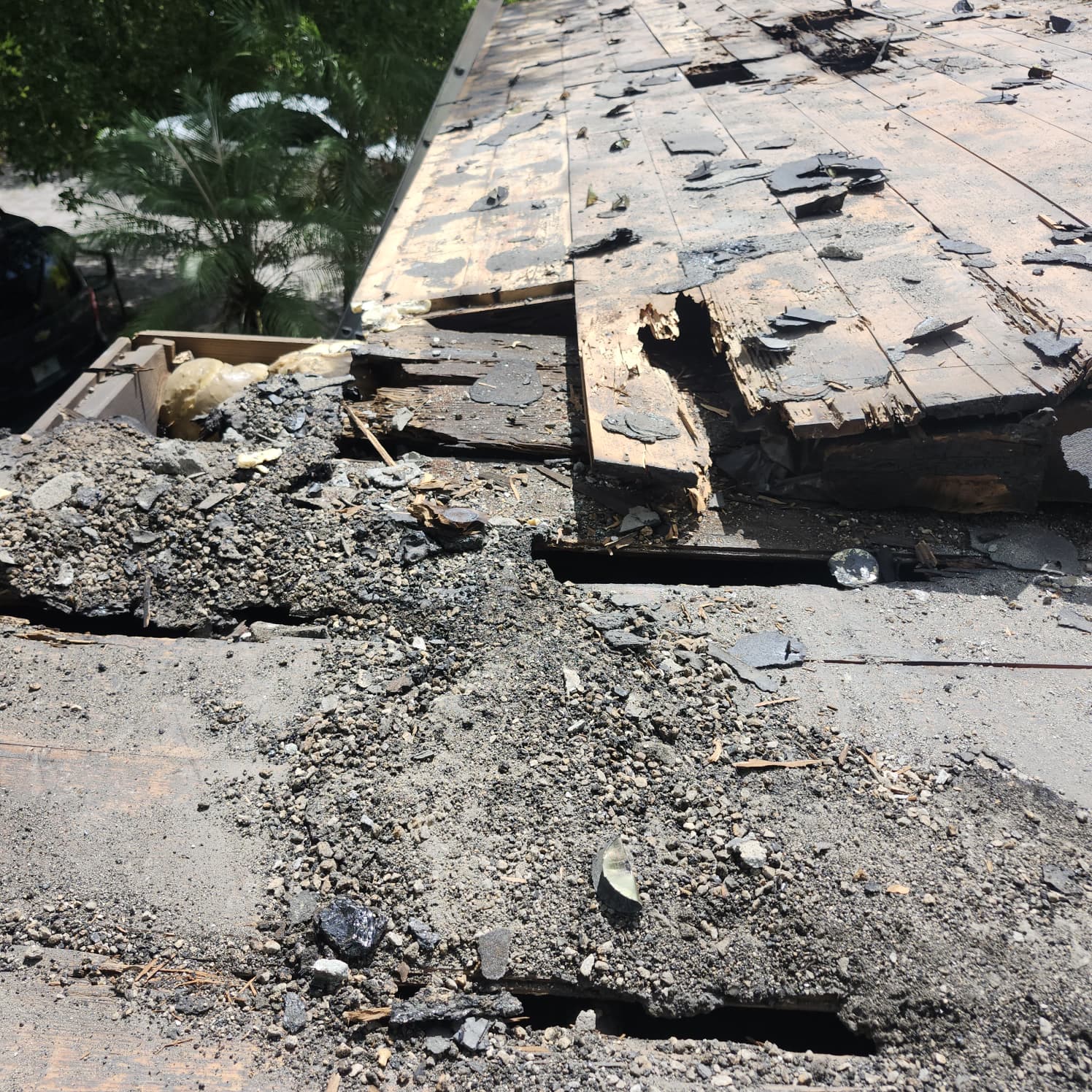
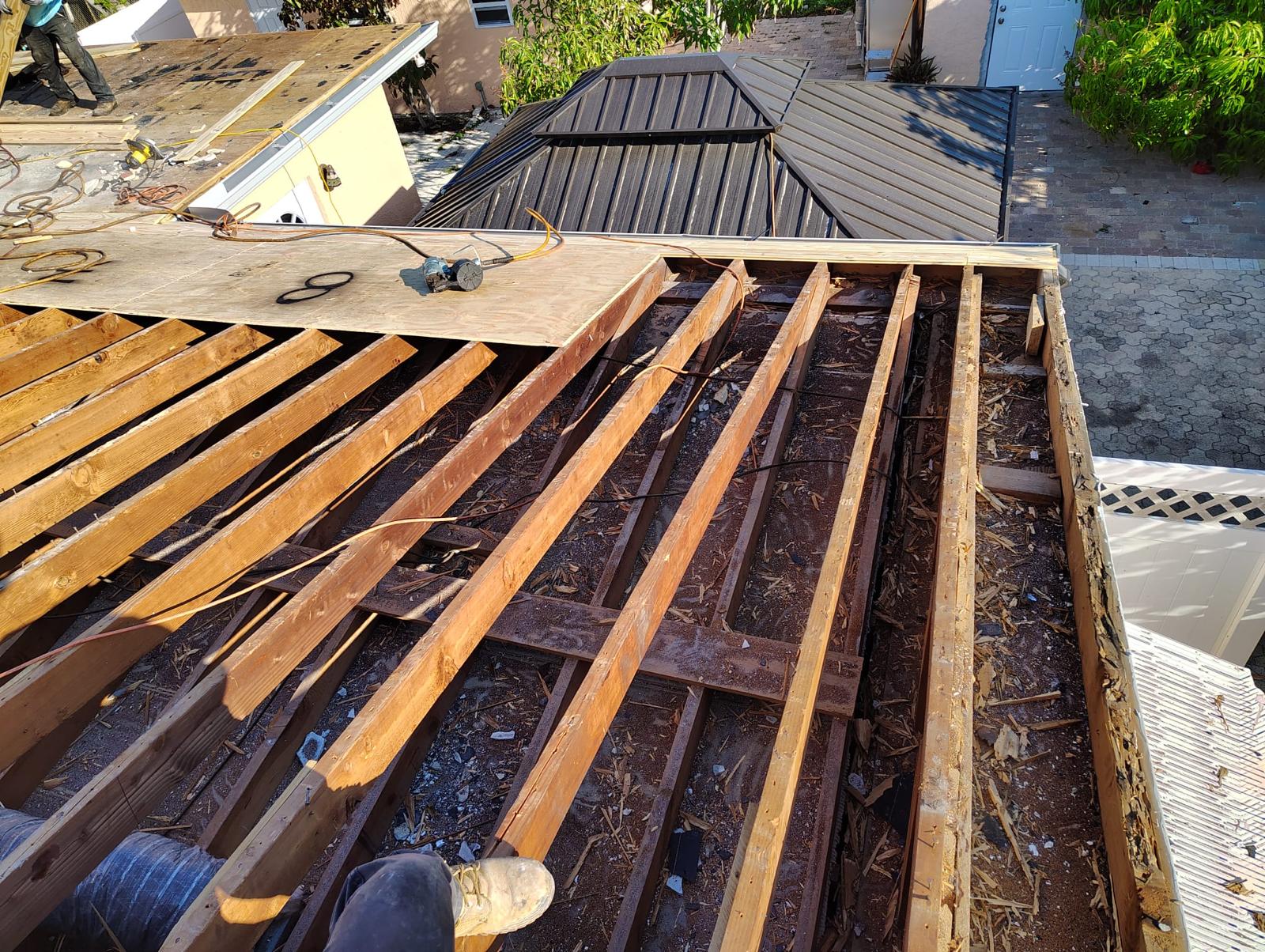
A proper repair may include removing roofing around the chimney, checking the deck, replacing damaged membrane, installing new step and counterflashing, and restoring the covering. Smearing roof cement where masonry meets shingles skips every layer that manages water.
Stucco walls require equal care. Flashing hidden behind stucco cannot always be replaced without opening a controlled strip of wall finish. A responsible scope explains who restores that finish and how the new counterflashing terminates. Homeowners in Coral Gables, Jupiter, and older Palm Beach Gardens neighborhoods often encounter these mixed roof-and-wall details on additions built at different times.
Valley Repair: Where Water Volume Multiplies
Valleys collect runoff from two roof planes, so a small obstruction or installation error carries more consequence there than in the open field. Leaves can hold moisture against metal, cut shingles may be placed too close to the centerline, and fasteners may sit inside the drainage channel.
Repair should begin above the visible leak and continue far enough downslope to preserve proper laps. Replacing only the corroded point can leave an uphill seam that directs water beneath the new material. On tile roofs, the tile courses must be lifted without breaking adjacent pieces and reset with the approved attachment method.
What a Professional Flashing Scope Should State
Look for these specifics before authorizing work:
- Exact location and type of flashing. “East chimney sidewall” is more useful than “repair leak.”
- How much covering will be removed. Access determines whether the hidden membrane and deck can be evaluated.
- Metal and corrosion compatibility. Coastal homes in Sunny Isles Beach, Bal Harbour, and Golden Beach need particular attention to dissimilar metals and exposed cut edges.
- How wall finishes will be handled. Stucco, siding, and coping work should not become an undefined extra after demolition.
- How the assembly will be tested. Controlled water testing may be appropriate once the repair has cured and conditions permit.
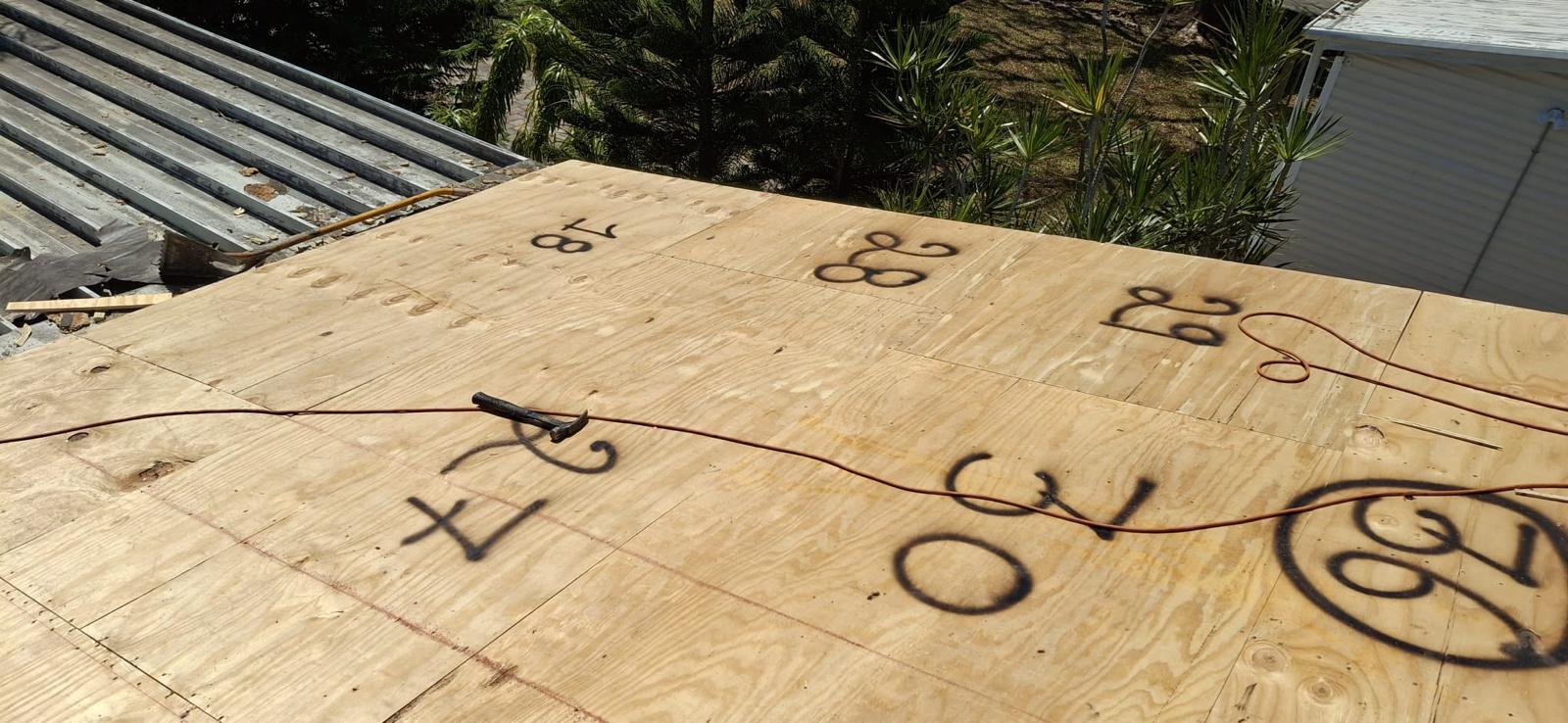
- Photos before closure. The most important layers will disappear beneath the finished roof.
For ambiguous leaks, a documented roof inspection should precede the repair. It prevents paying to rebuild a chimney detail when the true source is a cracked parapet cap or an opening farther upslope.
Frequently Asked Questions
Can roof flashing be repaired without removing shingles or tiles?
Minor exposed components may be serviceable, but flashing integrated beneath the covering normally requires controlled removal. If the contractor cannot see the concealed laps, they cannot verify that the drainage plane is restored.
How long should new flashing last?
Service life depends on metal type, coastal exposure, installation, and the materials touching it. Correctly selected and installed metal typically lasts far longer than exposed sealant, which should never be treated as the primary waterproofing layer.
Why does the chimney leak only when wind comes from one direction?
Directional leakage points toward a sidewall, counterflashing, cricket, or masonry opening that ordinary vertical rain does not reach. Record the wind direction and affected room; that information helps isolate the detail.
Is flashing repair part of roofing or masonry work?
Often both. The roofer handles the roof assembly and metal integration; damaged mortar, stucco, or coping may require coordinated wall restoration. The proposal should define responsibility before work starts.
Continue This Roof Repair Series
This article follows our guide to asphalt shingle roof repair in Palm Beach Gardens. Next, see how fascia and soffit damage can reveal a roof-edge leak.
Stop Re-Sealing the Same Leak
PSR Roofing Company Of Palm Beach Gardens diagnoses and rebuilds flashing at chimneys, walls, valleys, parapets, and roof edges throughout Palm Beach County. We document the failed detail and provide a defined scope before the assembly is closed.
Call (728) 221-5642 or schedule a roof flashing repair assessment.
Visit us: Palm Beach Gardens, FL
Need help with Roof Repair?
PSR Roofing is Palm Beach Gardens's licensed & insured expert for roof repair. Free estimates, honest pricing, and 24/7 emergency response.