Roof Inspection and Maintenance at Wall Transitions: Who Owns the Leak?
The roofer points to the stucco. The wall contractor points to the flashing. Meanwhile, a stain keeps returning where an addition meets the original house.
At a roof-to-wall joint, the most useful first question is not who owns the leak. It is which part of the assembly is admitting water, and what evidence supports that conclusion? Roof inspection and maintenance should recognize these trade boundaries rather than stop at the edge of the roof covering.
This is particularly relevant to Palm Beach Gardens homes with stepped roof levels, attached porches, and additions. The focus here is coordinating the junction, not another general guide to tracking a ceiling stain.
One Joint, Several Water-Management Layers
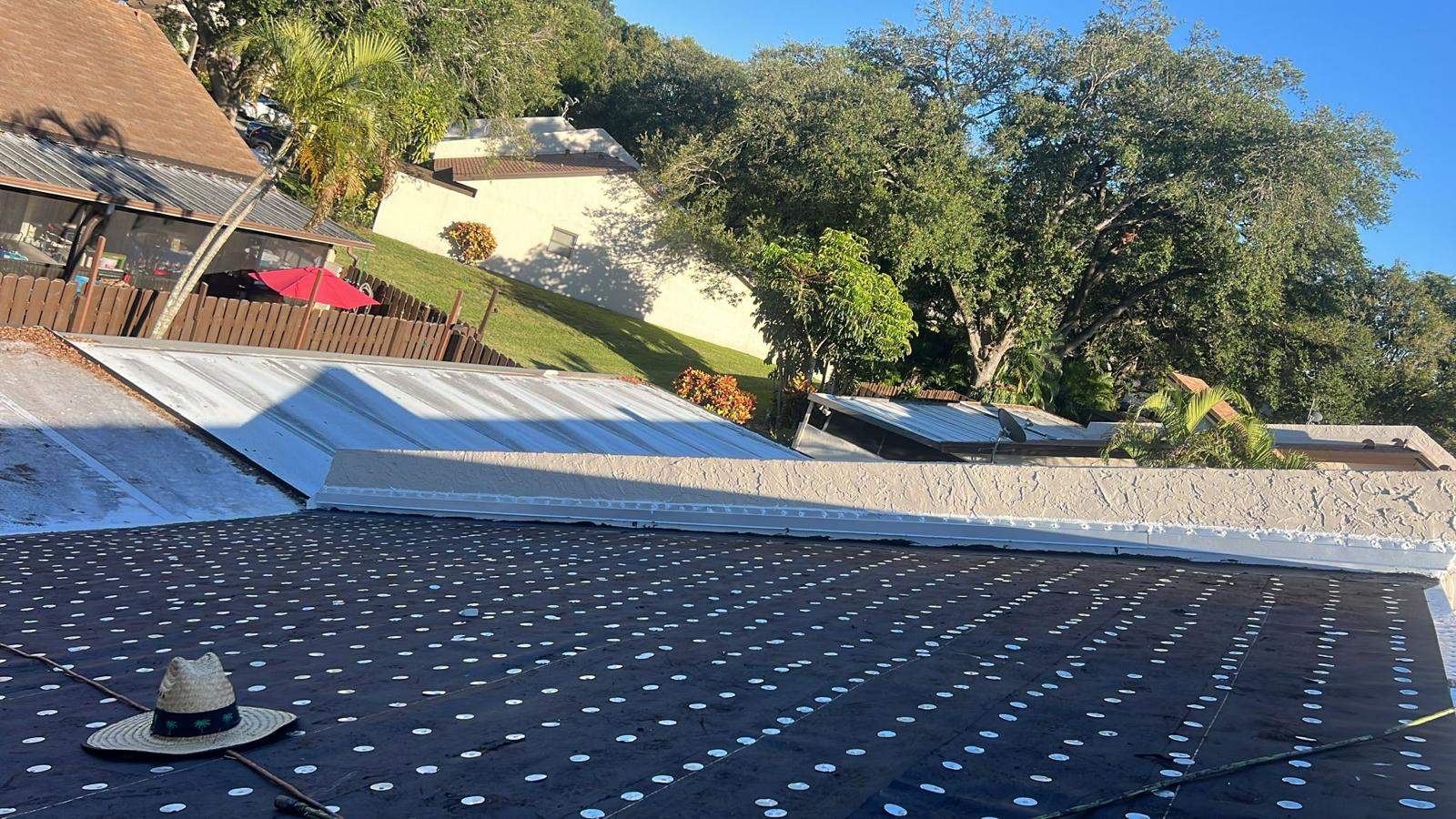
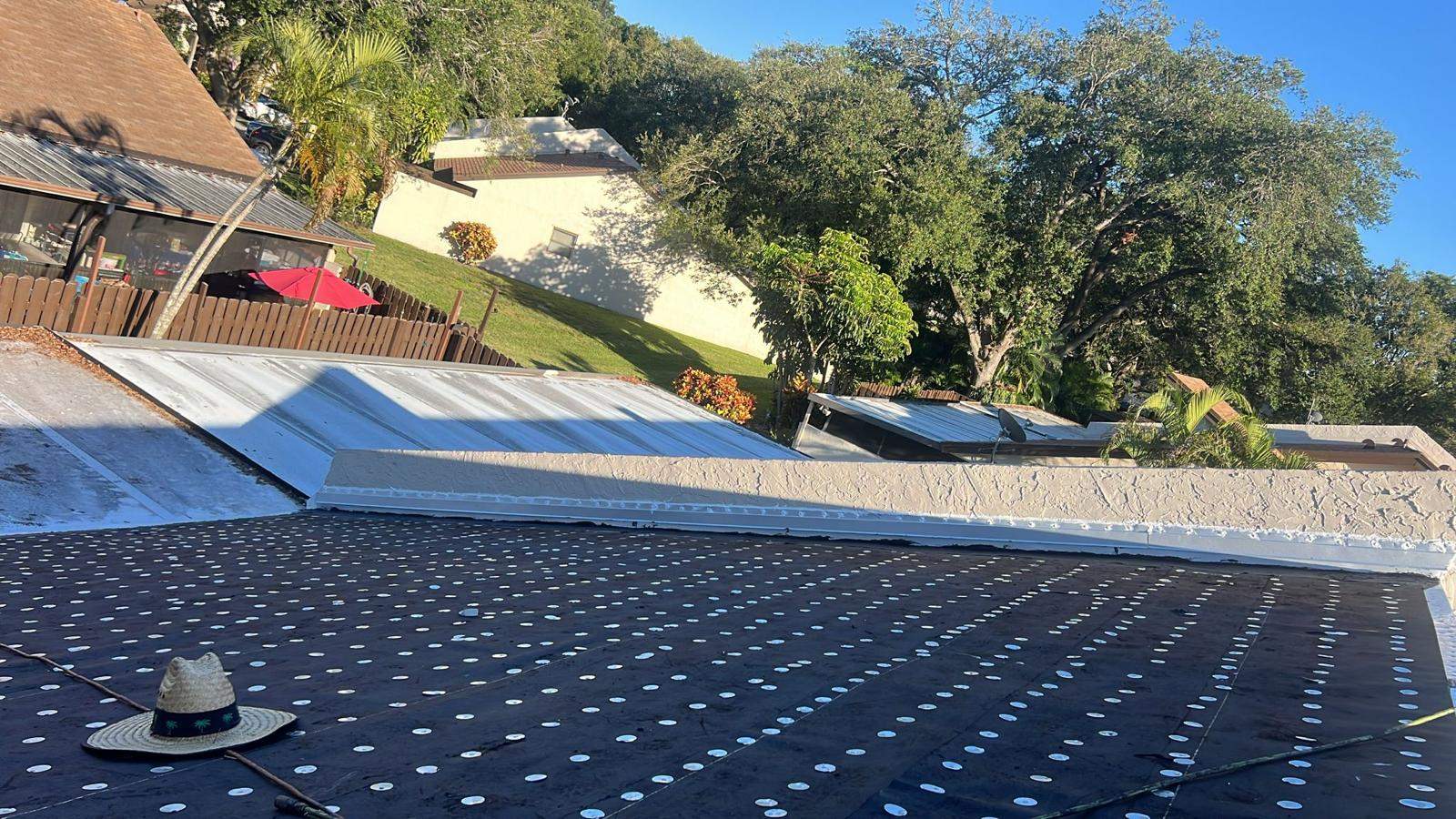
Where a lower roof meets a taller wall, the roof covering, flashing, wall finish, and concealed water-management layers need to work together. The exterior bead of sealant is only one visible piece of that assembly.
Flashing directs water away from the junction. Wall details need to manage water that reaches behind the finish. A repair to one layer may not correct a defect in the other.
In a Coral Gables home with a later addition or an El Portal house with a covered side porch, the original construction and newer work may use different details. Do not assume the junction was built the same way as the rest of the house.
Wind Changes the Direction of the Investigation
If a stain appears mainly when rain comes from one direction, include the wall above the roof in the investigation. Florida's hurricane retrofit guidance explains how wind-driven rain can enter cracks and gaps in exterior walls and around openings. 1
That does not mean every hairline stucco crack leaks. It means a roof that appears intact does not, by itself, rule out a wall source.
Useful Observations to Share
- Whether the symptom occurs in ordinary rain or primarily in wind-driven rain.
- Which exterior wall faces the weather during those events.
- The location of the interior stain relative to the wall and lower roof.
- Recent painting, window work, attachments, or repairs near the junction.
- Whether previous sealing changed the symptom, even temporarily.
Take photographs from safe ground-level positions. Do not spray the joint with a hose to improvise a test; uncontrolled water application can introduce damage and produce misleading results.
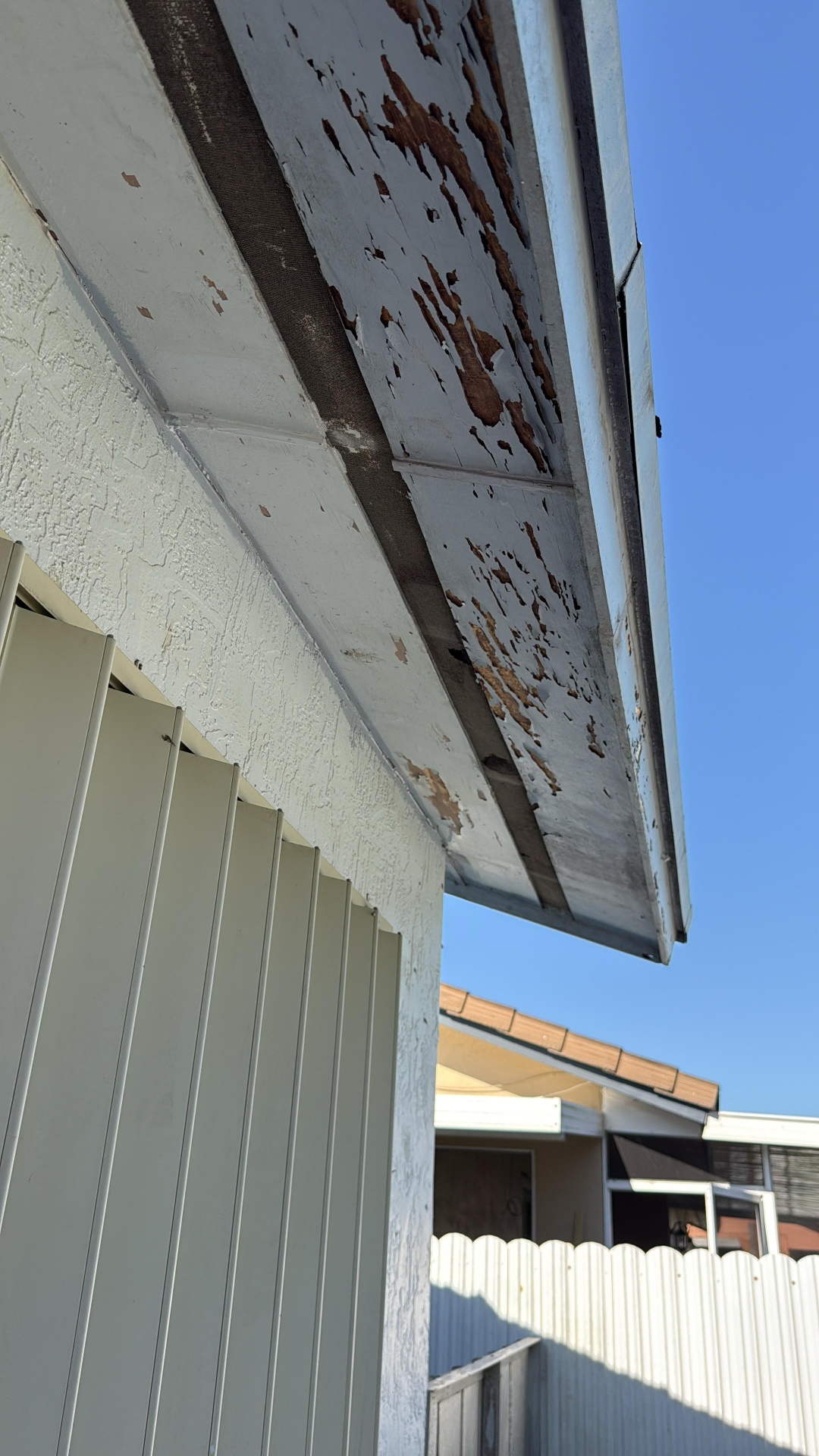
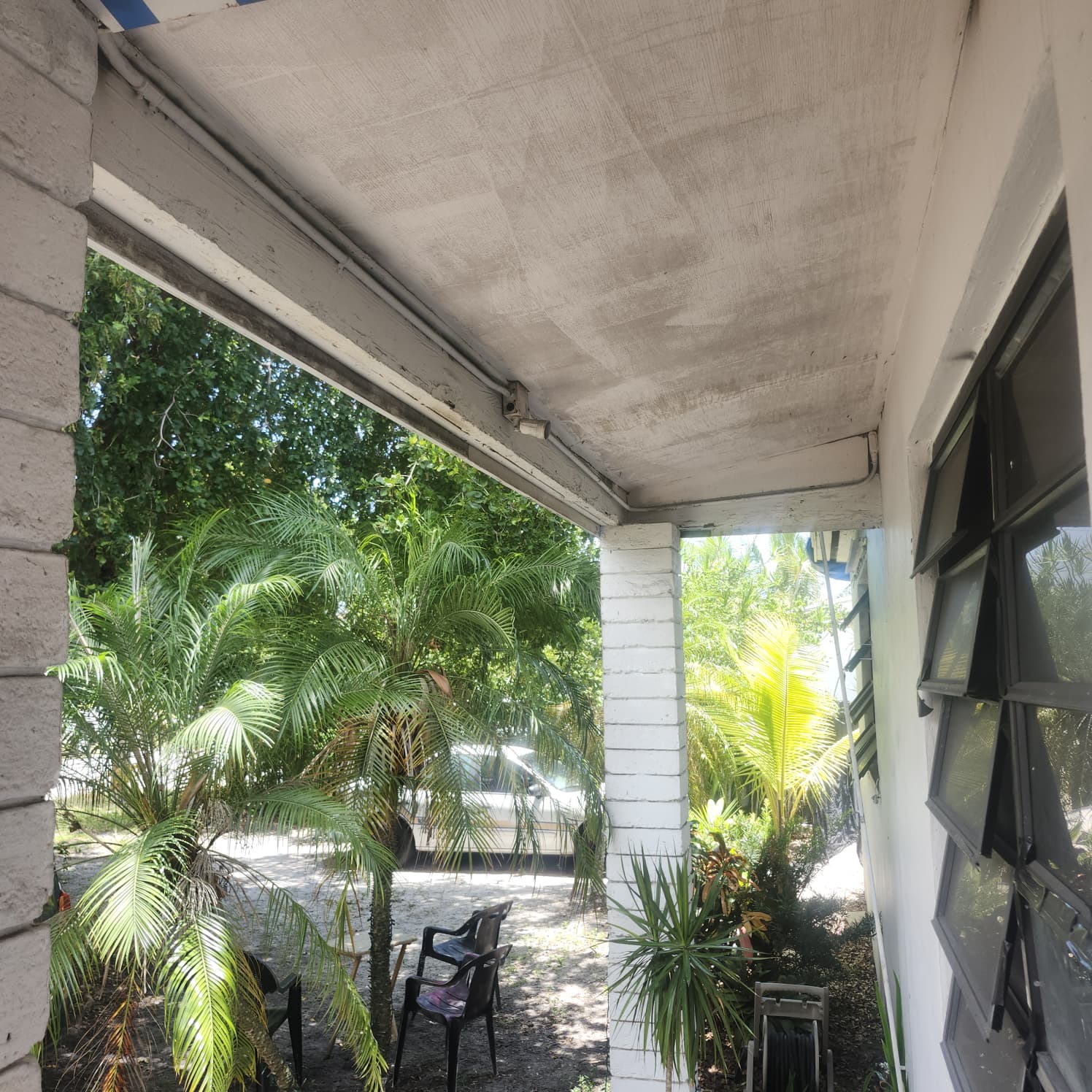
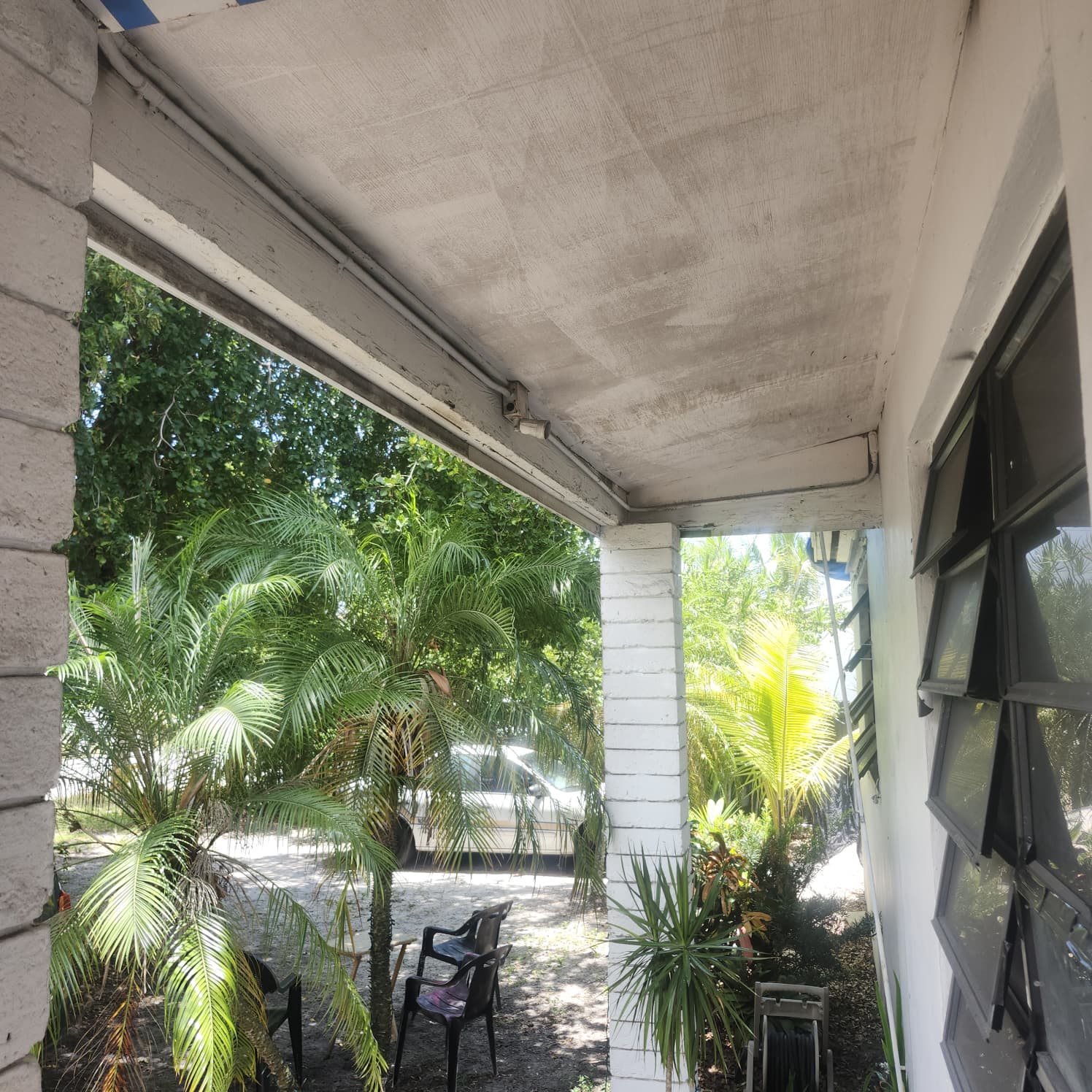
The peeling finish visible in this real project photo is a symptom. The photograph alone cannot identify the entry point or establish whether the roof or wall caused it.
Turn the Trade Boundary Into a Written Scope
Ask the professionals to identify what each person will inspect and what remains outside their scope.
| Area of concern | Investigation question | Possible coordination |
|---|---|---|
| Roof flashing at the wall | Are visible laps, terminations, and transitions performing as intended? | Roofing contractor |
| Wall finish above the joint | Are cracks, openings, or repairs contributing to entry? | Qualified wall or building-envelope specialist |
| Window or attachment above the roof | Could water travel down from an opening? | Appropriate specialist for that assembly |
| Concealed junction | Is a controlled opening necessary to confirm construction? | Agreed investigation and restoration scope |
Responsibility cannot be assigned from the table alone. Qualifications, findings, and the actual construction determine the work required.
For persistent problems in Jupiter or Palm Beach Gardens, ask whether a coordinated visit is more useful than separate appointments where each contractor sees only their portion.
Why Blanket Sealing Can Make Diagnosis Harder
Spreading sealant across every joint can hide the original detail, obstruct intended drainage, and leave future investigators uncertain about the layers beneath it. It may also make subsequent repair more difficult.
Before approving work, ask the contractor to explain how water should leave the junction after the correction. A proposal should identify the failed detail, the intended correction, and any adjoining work needed. The roof repair portion should not silently include wall work that has never been evaluated.
Verify Both the Correction and Its Limits
Keep photographs of exposed conditions if the agreed work opens the joint. Request an explanation of what was corrected and what remains unverified. If specialist water testing is proposed, confirm the sequence, safeguards, and how results will be interpreted.
Continued monitoring during comparable weather may help assess performance, but one dry event is not a guarantee. Follow-up roof inspection and maintenance should use the original junction and symptoms as reference points.
Common Questions
Does a leak next to a wall mean the flashing failed? Not necessarily. Water can enter above the junction and travel before becoming visible.
Should I repaint the stain first? Wait until the moisture source and affected materials have been evaluated. Repainting can conceal evidence without addressing the cause.
Continue the October Series
Previous: when moisture testing is useful, and what it cannot prove.
Next: planning inspections around pool enclosures and hard-to-reach roof sections.
Stuck between a roof diagnosis and a wall diagnosis? Contact PSR Roofing Company Of Palm Beach Gardens or call (728) 221-5642 to discuss the roofing side of the investigation. Our address is Palm Beach Gardens, FLview our Google Maps location.
Need help with Roof Inspection?
PSR Roofing is Palm Beach Gardens's licensed & insured expert for roof inspection. Free estimates, honest pricing, and 24/7 emergency response.