Roof Inspection and Maintenance Under Palm Beach Gardens Trees: Follow the Debris Pattern
You arrange a cleanup, the roof looks clear, and a few weeks later the same corner is packed with leaves again. That repeated location is useful information. It tells you where the next inspection should concentrate, and why a one-time cleanup may not be the complete answer.
Under Palm Beach Gardens's tree canopy, roof inspection and maintenance benefits from mapping where material lands, where it moves, and where it stops. The aim is not to remove every tree near the house or repeat a general roof-washing routine. It is to address recurring obstructions without harming the roof or the landscape.
Start With the Catch Points
Debris does not distribute itself evenly. Roof shape, adjoining walls, equipment, and drainage routes create places where leaves, twigs, and larger fragments collect.
Look from the ground for an overhanging branch or a visible accumulation, and ask the roofer to check the areas you cannot see. A valley beneath an oak canopy in Coconut Grove presents a different maintenance problem from a low-slope porch beside palms in Palm Beach Gardens.
Places Worth Mapping
- Valleys where two slopes meet.
- The uphill side of equipment or other roof obstructions.
- Roof-wall corners on lower additions.
- Drain and scupper approaches on low-slope sections.
- Gutter outlets and roof edges below concentrated tree cover.
GAF's maintenance guidance identifies debris and clogged drainage as conditions professional inspections should address. 3
Record the Type of Debris, Not Just the Amount
Different shapes create different practical problems. Small leaves can gather in outlets; twigs can lodge across openings; a larger fallen frond can obstruct a drainage route or conceal the surface beneath it. Those are observations to document, not a claim that one tree species always destroys roofs faster.
| Debris pattern | What to ask the inspector | Possible next step |
|---|---|---|
| Material repeatedly collects in one valley | Is water still moving through the designed path? | Remove obstruction and inspect the underlying detail |
| Leaves gather at a gutter outlet | Is the outlet or downstream route restricted? | Evaluate the drainage system, not only the roof surface |
| Twigs collect beside equipment | Is the equipment layout creating a catch point? | Plan compatible maintenance access and clearing |
| A branch touches the roof | Is contact damaging the covering? | Coordinate roof evaluation with qualified tree care |
| Debris remains after nearby areas clear | Is roof geometry or an obstruction holding it there? | Reassess that specific location |
The table is a discussion tool, not permission to climb onto the roof or reach into a drain from a ladder.
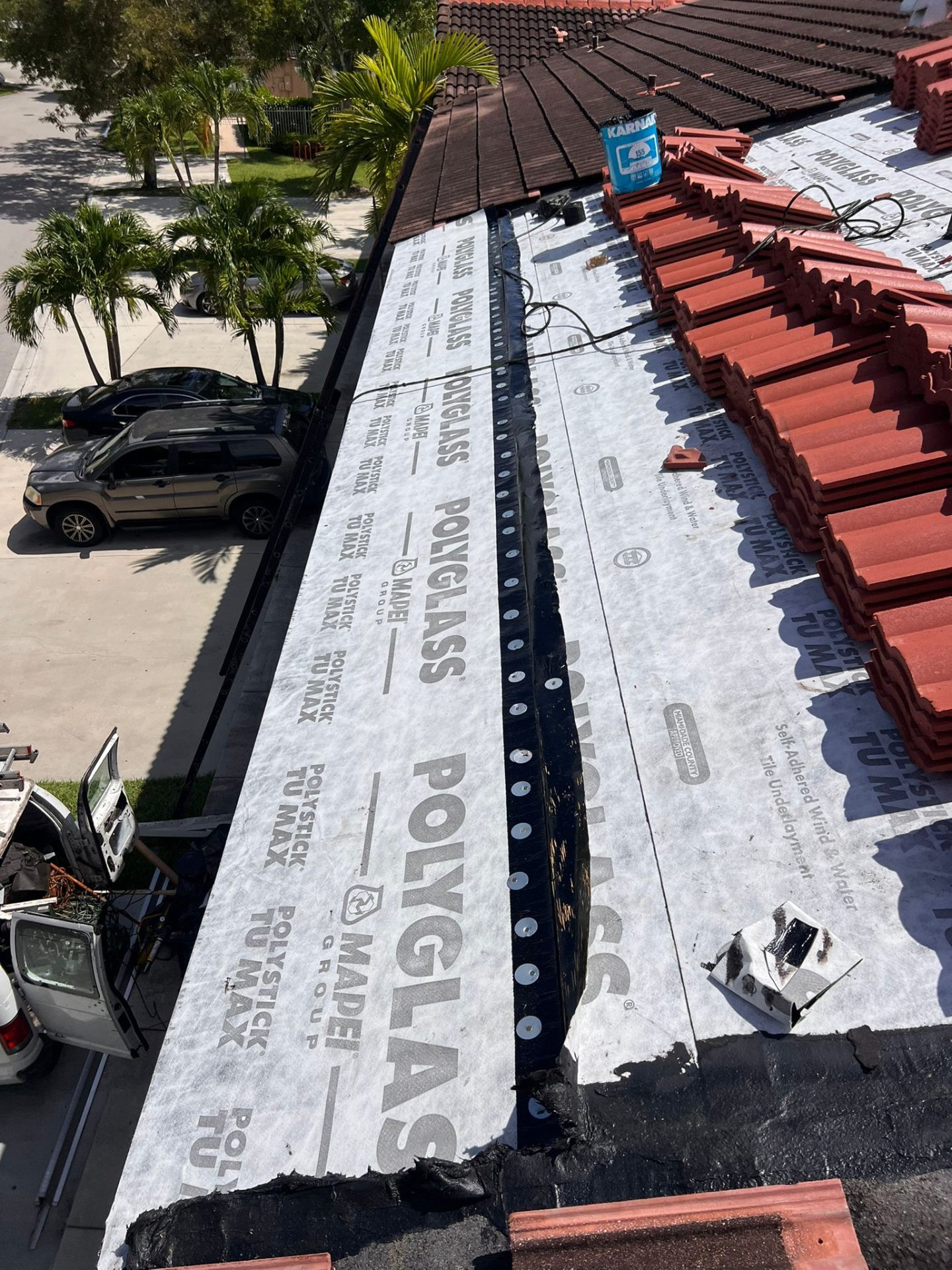
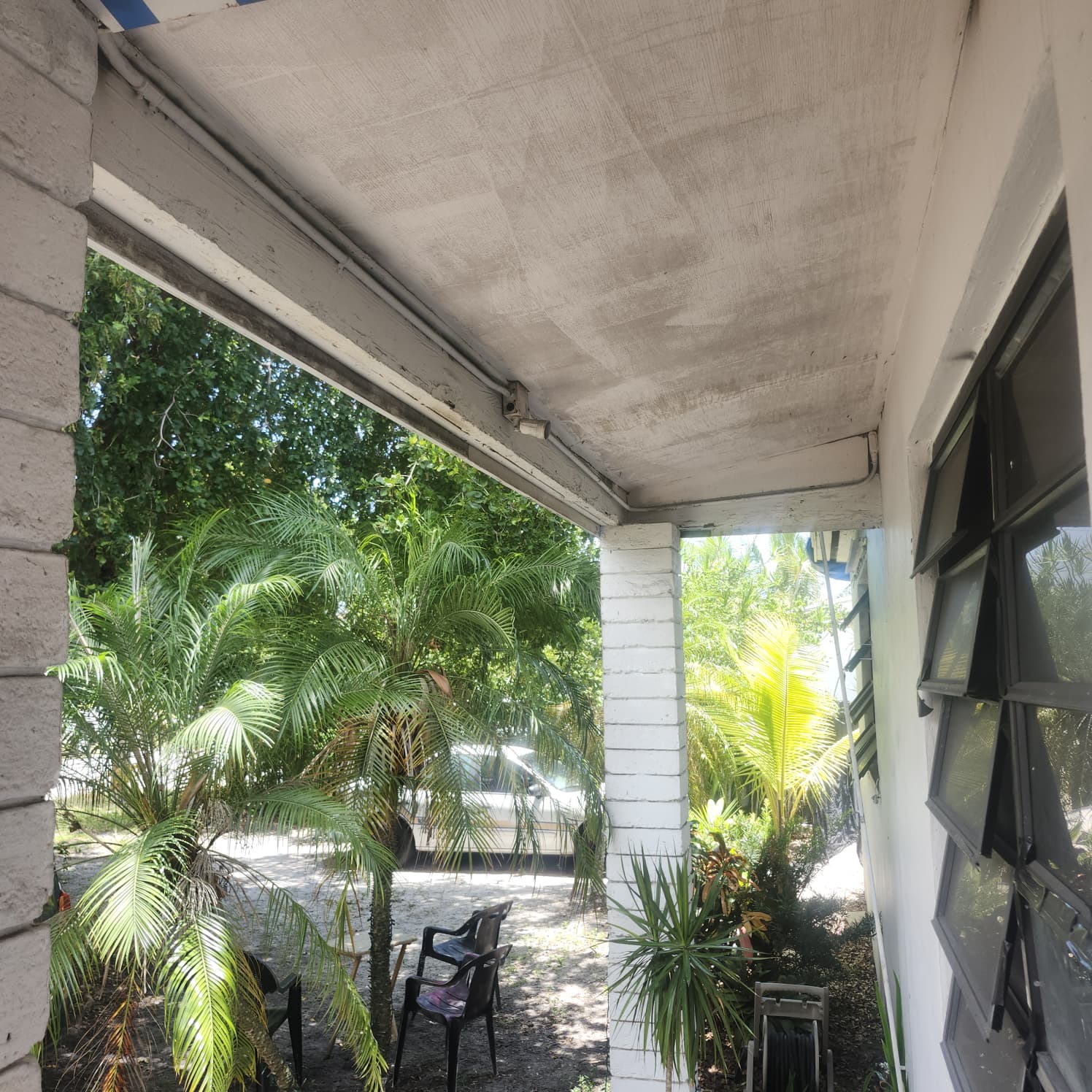
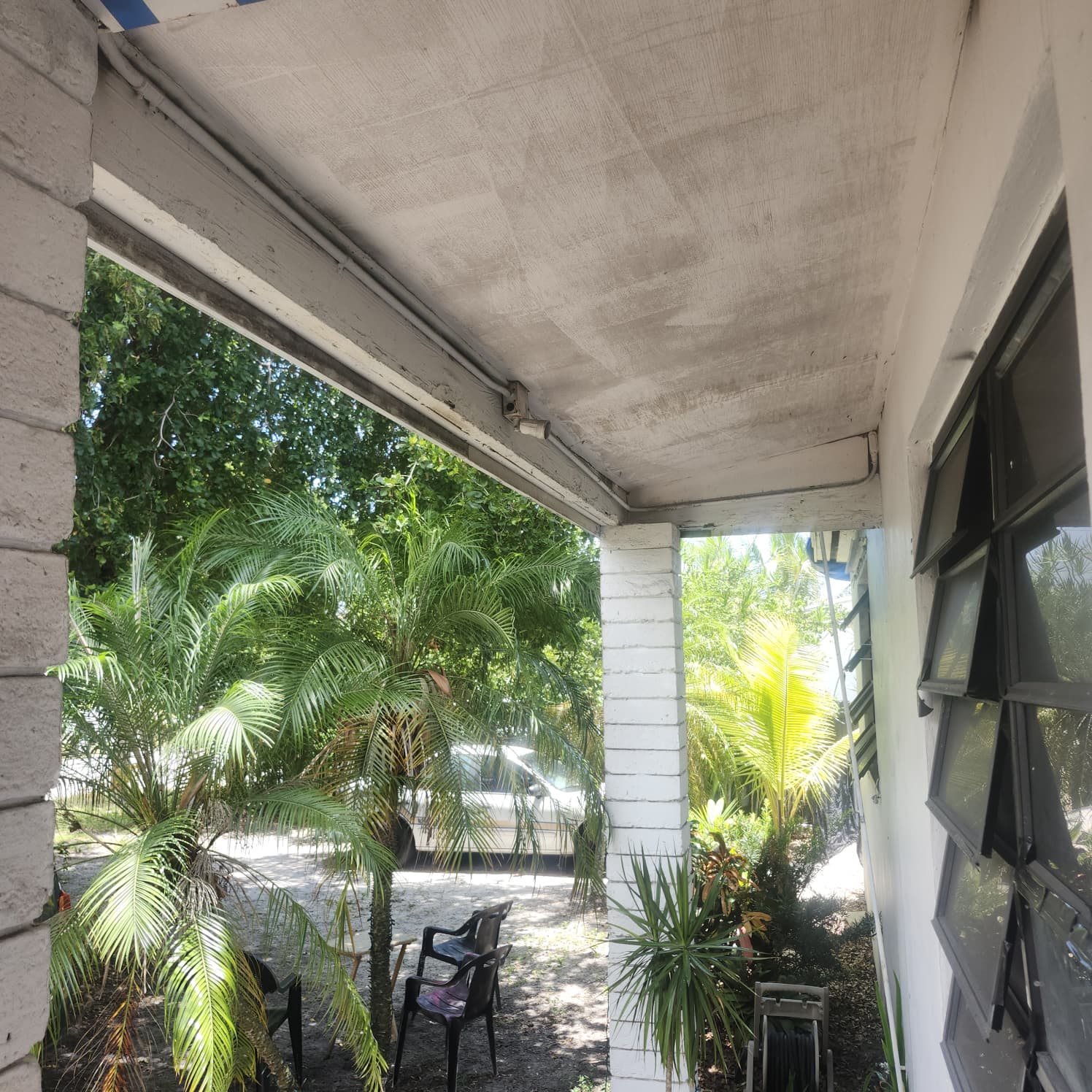
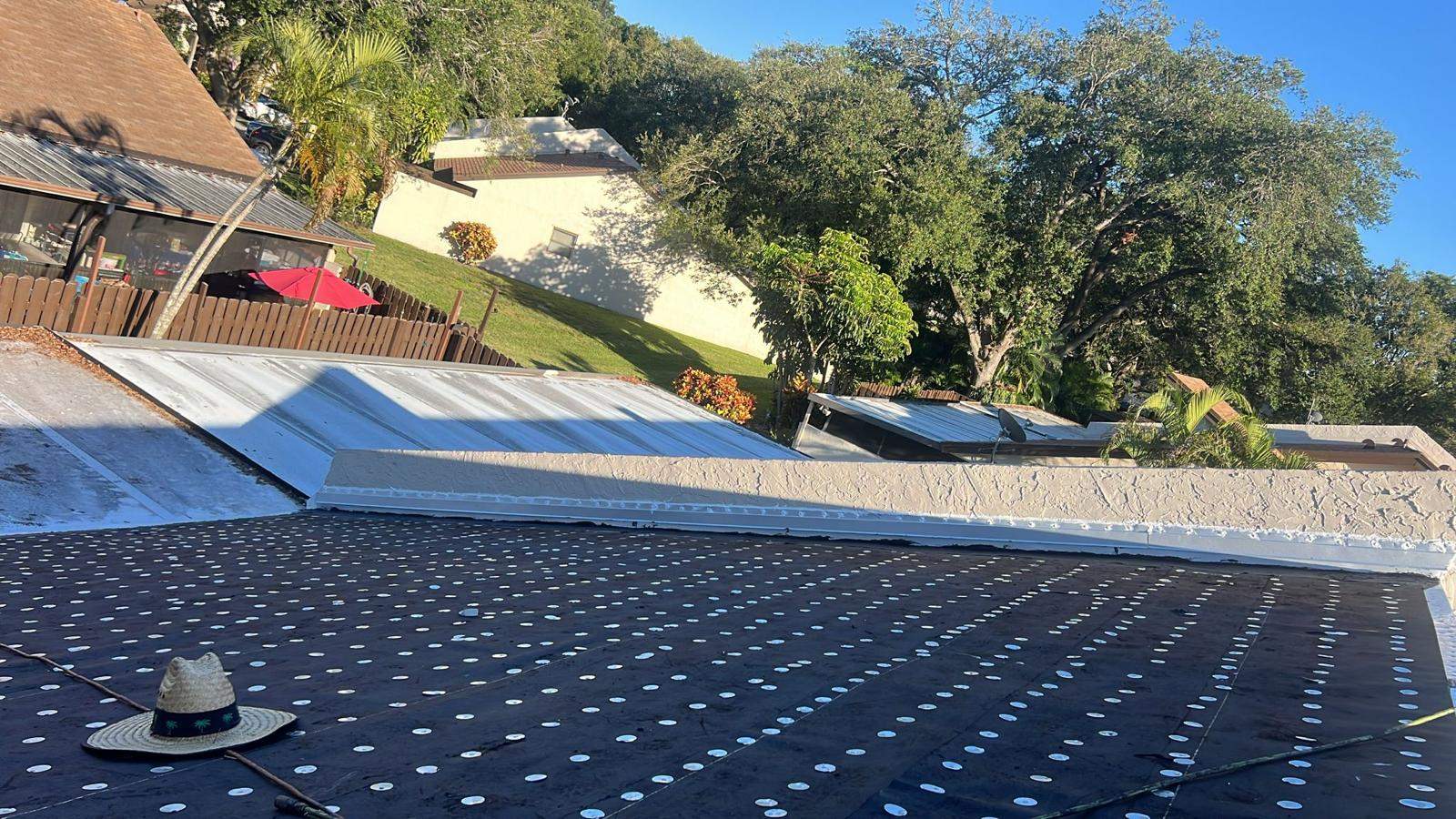
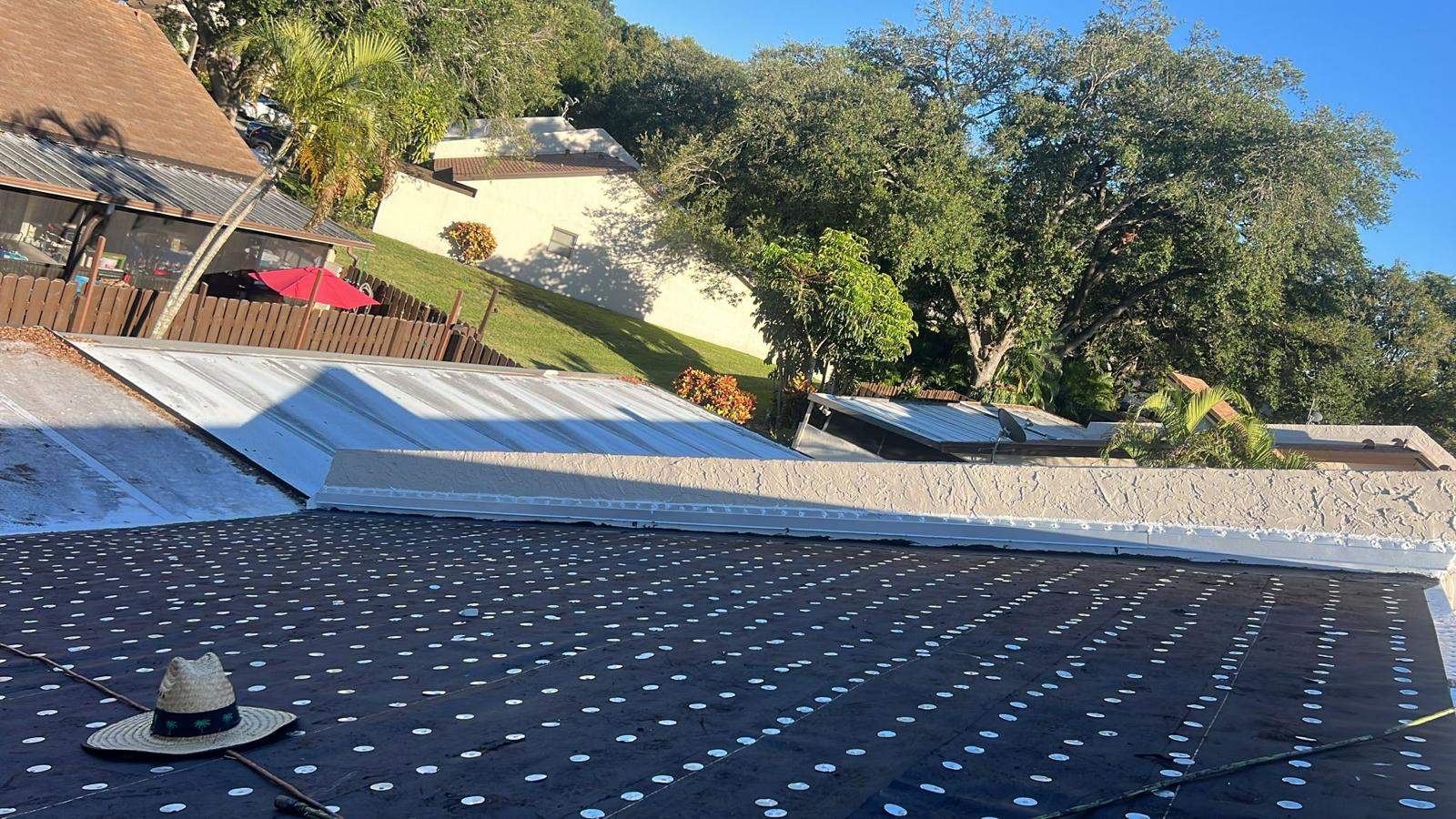
This real project photograph shows nearby canopy and roof geometry. It does not establish that the trees caused damage at this property.
Separate Clearing From Cleaning
Removing an obstruction and washing discoloration are different tasks. A roof can look stained while draining correctly, or look clean from the street while a hidden outlet remains blocked.
Before approving work, ask whether the scope includes checking the surface beneath the removed material. Avoid aggressive scraping, unapproved chemicals, or washing methods chosen solely to make the roof look new. The appropriate method depends on the installed system and its manufacturer guidance.
If the obstruction extends into the gutter system, gutter installation and repair may be relevant. But replacing gutters is not automatically the answer to leaves arriving from above; first establish which part of the drainage route is failing.
Coordinate With Tree Care Without Inventing a Clearance Rule
A branch rubbing a roof warrants attention, but there is no single distance in this article that fits every species, building, utility line, or local requirement. Ask a qualified tree professional about appropriate pruning and confirm any applicable municipal restrictions or permits before work begins.
Do not cut large limbs, climb a tree, or work near power lines yourself. The roofer evaluates the roofing condition; the tree professional evaluates safe, suitable tree work. Neither role should be casually substituted for the other.
For properties in Jupiter, Biscayne Park, and Coral Gables, preserving mature landscaping can be important to the owner. A location-specific plan is more useful than the instruction to “cut everything back.”
Make the Follow-Up About Recurrence
After the agreed clearing, record the date and locations addressed. During later ground-level observations, note whether the same corner fills again and whether a weather or tree-shedding event preceded it.
Ask for the next roof inspection and maintenance visit to revisit those exact locations. The interval should reflect the property's actual accumulation pattern and the professional's findings rather than a universal schedule copied from another home.
Common Questions
Should I remove a healthy tree because leaves reach the roof? Not based on that fact alone. Start with roof condition, drainage performance, and qualified tree-care advice.
Will gutter guards solve the problem? They may change maintenance needs, but they can also collect material. Ask whether a proposed product suits the existing roof and gutter arrangement, and how it will be maintained.
Does discoloration prove decay? No. Appearance alone does not establish damage to the roof assembly or justify replacement.
Continue the October Series
Previous: safe inspection planning around difficult roof access.
Return to the beginning: what to check after rooftop AC service.
Does the same roof corner keep collecting debris? Contact PSR Roofing Company Of Palm Beach Gardens or call (728) 221-5642 to discuss inspection and maintenance priorities. We are at Palm Beach Gardens, FLsee our location on Google Maps.
Need help with Roof Inspection?
PSR Roofing is Palm Beach Gardens's licensed & insured expert for roof inspection. Free estimates, honest pricing, and 24/7 emergency response.